


The Art of Re-Seeing
Community, Light + Why March Feels Different
March doesn’t come in with thunder. Not like holidays. Not like February with its ceremonial air. March inches in. The light shifts first. Then the air. Then people start coming back outside — almost without realizing it. On Waterloo, you can feel it coming.
We felt it last month at the Brite Winter Fest. We see it happening on Walk All Over Waterloo. We’ll feel it again in late summer when the Waterloo Arts Fest rolls around. Sidewalks hum. Art studio doors stay open longer. Coffee spills over patios. Conversation flows out into the street.
Art stops becoming something you plan on going out to see and starts becoming something you just happen upon.
When that happens, magic starts to happen. We start to re-see.
When Community Shifts the Context
The artwork hanging on the walls is the same work that was there last week. Or last month. The paint hasn’t shifted. The surfaces are unchanged. But something about how we experience it evolves.
A portrait we may have quietly studied in January now feels active. A patterned composition we might have walked by during cold months lights up under long spring days. A large-scale painting that stood stoutly on its own in winter now feels like it’s humming with the city just beyond the art gallery doors.
Community shifts context.
Art doesn’t exist in a vacuum. Sure, it can be created in one. But to have a life beyond that studio, art exists in context. Art absorbs the energy around it. The rhythm of foot traffic. The movement of bodies. The activity and conversation that collect around it.
Events like Brite Winter, which spills music and laughter onto Waterloo. Walk All Over Waterloo, which invites curious outsiders into art studio spaces. Waterloo Arts Fest, which turns the street into a multi-block art party — the artwork inside Framed Gallery doesn’t exist separately from those activities.
It absorbs them.
An Art Gallery as an Anchor
ANY gallery should feel like an extension of the neighborhood it lives in, not detached from it. Rooted. Grounded. Firmly planted in a way that allows the art gallery to hold space while everything around it moves and shifts.
An anchor holds ground, but it does not resist movement. It gives movement purpose.
Healthy arts and cultural spaces are anchors. They are rooms that allow things to hang. Yes. But also rooms where community gathers. Where people return. Where the local art scene comes to raise the vibrancy of a neighborhood’s identity. March invites us to re-see that.
From “Me” to “We”
Winter asks us to go inward. To sit with work in silence. To connect with it on a deep, personal level. And when those rains come and that chill sets in, there’s beauty in that, too.
But when the seasons change and the streets open back up, we’re offered an invitation to experience art in a new way.Together.
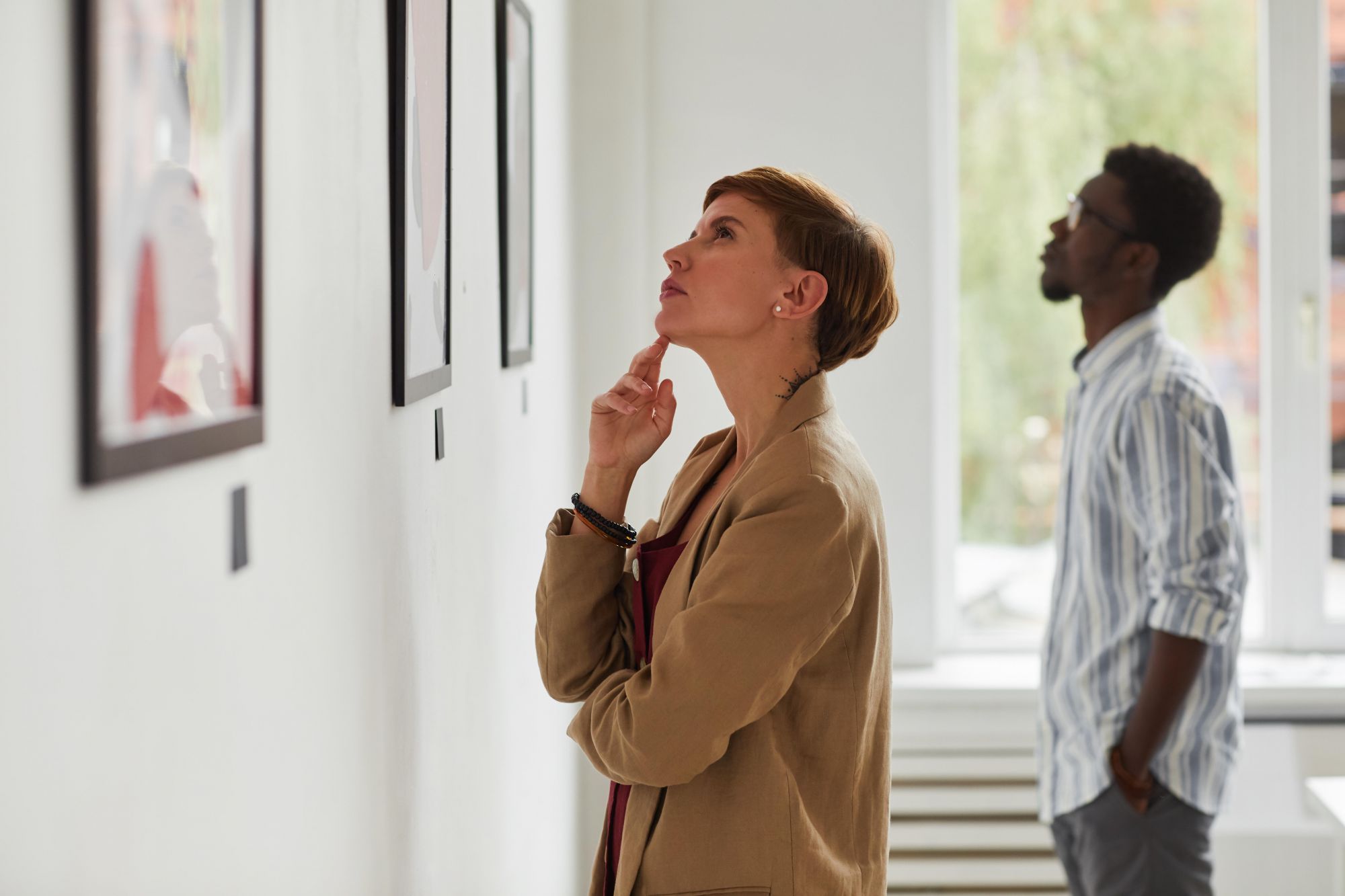
We watch each other look at art. We overhear snippets of conversation. We see a kid stop short in front of a large-scale painting. We watch someone studying a portrait trying to figure out if they know the person whose face is filling their vision.
The experience becomes less about you. And more about we.
Art expands when we’re experiencing it collectively.
Re-seeing isn’t about seeing something new. It’s about remembering what’s always been there and allowing our perceptions to shift with the changing world around us.
One painting we may have studied alone in winter feels contemplative. Studied on a Sunday after a bustling festival weekend when musicians and artists are popping in and out of every door down the street. That same piece feels celebratory. Vibrant. Connected.
An art piece with lots of visual texture we may have quietly sunk into can feel like a party in spring. It starts bouncing off the lush greenery and reopened shops around it.

The Power of New Light
Light has a lot to do with it, too.
March light is new light. It pools longer. Streams in from different angles. Shadows we may have noticed in winter disappear. Color and tone we may have overlooked with merciful winter days reveal themselves. Colors open up and warmed-toned pieces suddenly feel cozy.
New light shifts art.
But there’s more than just natural light filtering into spaces that shifts the way we look at artwork. When festivals pop up and streets are filled with happy weekend strollers, art inside galleries shifts, too.
It shifts because there’s a NEW ENERGY INFILLING THESE SPACES. It’s a communal light.
It’s knowing that the artists who’s work you’re looking at were probably out walking those same streets Saturday morning while musicians perform on Waterloo. It’s knowing that Framed Gallery isn’t just a space to buy and sell artwork in isolation from the neighborhood. We’re part of a greater creative ecosystem DOWN HERE.
Waterloo is a cultural corridor, and Frame Gallery is lucky to live inside that corridor. Not above it. Not disconnected from it. Inside it.
That’s what being a community anchor is all about. Showing up. Showing up on busy weekends and showing up when it’s quiet. Opening our doors when the street is buzzing and opening them when it’s not.
Acknowledging that artwork has more impact when it’s embedded in a place.
When Brite Winter Fest rolls around, Framed Gallery gains more than foot traffic. We feel the momentum those musicians bring to the area. When Studios open up for Walk All Over Waterloo, Framed Gallery doesn’t just experience a studio opening — we experience the exchange that happens when curious outsiders walk into creative spaces.
When Waterloo Arts Fest comes around, it’s not just a celebration of art and culture. It’s a reminder of our identity as creatives down here.
Art shifts with context. With season.
Re-Seeing as a Practice
With how many people stop to give it attention. Relationships aren’t built in a day. And re-seeing is a practice.
It’s the practice of slowing down. Of looking at art with fresh eyes. Of resisting the urge to consume everything we see and choosing instead to return.
To walk into a gallery you’ve been to a dozen times and let something on the walls surprise you.
To encourage art collectors to rotate their collections and see old favorites in a new light. To invite friends to walk with you through art exhibitions you’ve already seen and point out what they notice that you didn’t.
So let’s invite March to teach us how to re-see.It comes quietly. But it promises big shifts in how we experience our neighborhood.Our art galleries. Our community.
Light extends again. Streets fill up. Festivals return. Artists migrate outside. We come back together.
And slowly but surely, art starts to feel a little bit different than it did the day before. Not because anything changed on the walls. But because WE did.
Waterloo doesn’t close up in the winter. Artists on this block bunker down. We prepare. Rest. But once the streets fill back up and folks return from winter breaks, we’re reminded that art and culture isn’t something that exists above a community.They exist inside it.
Come experience re-seeing at Framed Gallery, by booking an art gallery viewing today.